The United Nations was formed in 1945 as a successor to the League of Nations and the original 51 member states now number 193.
It’s an association of states for international peace, security and cooperation and the organization has played a role in many areas such as refugees, development assistance, disaster relief, cultural cooperation and peacekeeping.
The UN is based in New York and the principle institutions are the General Assembly, the Security Council, the Economic and Social Council and the Trusteeship Council.
The International Court of Justice is based in The Hague, Netherlands.
The World health Organization (WHO), the UN Educational, Scientific and Cultural Organization (UNESCO) and the International Bank for Reconstruction and Development (World Bank) are UN agencies.
The UN Charter sets out four main purposes. To…
- Maintain worldwide peace and security
- Develop relations between nations
- Foster cooperation between nations in order to solve economic, social cultural, or humanitarian international problems and
- Provide a forum for bringing countries together to meet the UN’s purposes and goals.
The UN, with its specialized agencies, is engaged in a wide range of activities to improve people’s lives such as disaster relief (Jupiter), health and disease education (Mercury), the advancement of women (Venus) and the peaceful uses of atomic energy (Pluto).
It provides development assistance, cultural cooperation and peacekeeping and tends to problems associated with refugees and climate change that are caused by people behaving badly.
The Security Council
The five permanent members of the UN Security Council are China, France, Russian Federation, United Kingdom and the United States.
Ten non permanent members are elected for a two year term.
The five permanent members have the power of veto. This enables them to prevent the adoption of any ‘substantive’ resolution.
The Security Council is divided. Member countries with extreme agendas and extremist leaders are inclined to disrupt the proceedings.
The United Nations birth chart
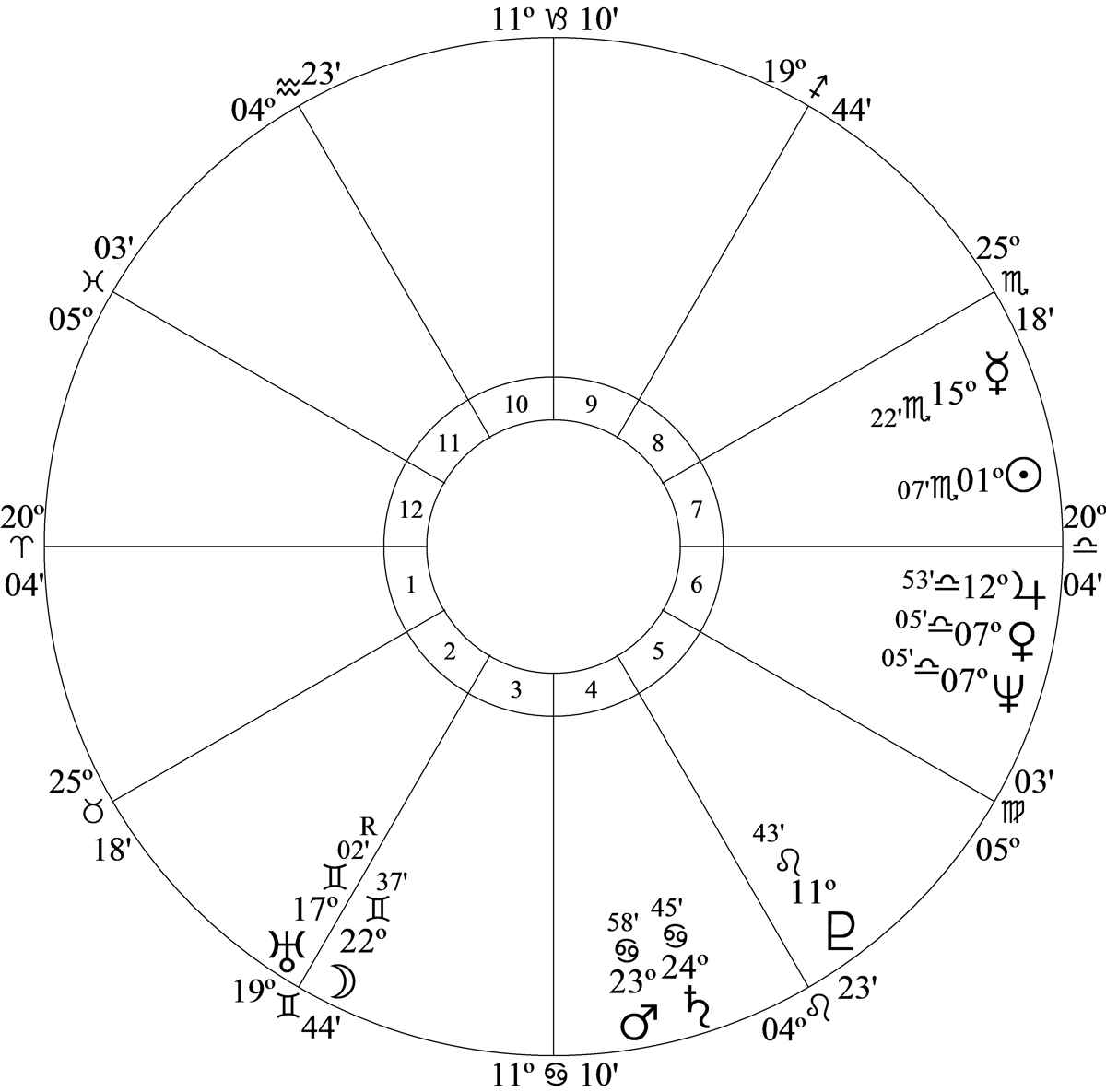
The chart data is: October 24, 1945 at 4.45pm EST – 38N53; 77W01
The UN’s chart has the third decanate of Aries on the ascendant.
Aries is a militant sign that’s renowned for its combative tendencies and inclination to interfere in the affairs of others. But the third decanate is sub-ruled by Jupiter and Jupiter diverts the aggressive energies into religious and philosophical channels.
It’s pictured in the sky by Perseus who gained renown through his daring exploits (Aries) in relieving oppression (Jupiter).
Perseus – knight errant of the zodiac – vanquished the Gorgon Medusa. She was a loathsome creature– the personification of greed and selfishness (Saturn) – who had living snakes for hair.
Perseus campaigned against the sordid conditions that oppress civilized life so you could say that the United Nations – in the Age of Aquarius – is playing the role of a modern day Perseus
It’s relieving oppression; assisting those suffering in the war zones; engaged in peacekeeping; striving to resolve conflict; promoting economic and social progress, providing disaster relief and committed to maintaining international peace and security.
It’s a human rights advocate and obliged to better living standards and promote friendly relations between countries.
The UN’s chart won’t tell you which countries are at war or which countries are suffering due to man-made or natural disasters. But it will tell you how the organization is faring and whether it is moving forward or battling headwinds as it strives to fulfill its international obligations.
Armed conflict
In 2026 the United Nations struggles to deal with armed conflicts spread across the world. There are wars in Ukraine, Sudan and Myanmar to name a few. 26 are rated as critical or serious. The situation in Gaza is fragile and remains uncertain.
In 2016 ten thousand children were killed or maimed in war. Child soldiers are another matter.
Millions of people struggle to escape the violence.
Refugees
A refugee is someone who has been forced to flee their country because of persecution, war, or violence. They have a well-founded fear of persecution for reasons of race, religion, nationality, political opinion or membership in a particular social group. Most likely, they can’t return home or are afraid to do so.
The UN Refugee Agency estimates that 2.5 million refugees worldwide will need resettlement in 2026.
War and ethnic, tribal and religious violence are leading causes of refugees fleeing their countries.
Two-thirds of all refugees worldwide come from Syria, Afghanistan, South Sudan, Myanmar and Somalia. Finding a safe-haven isn’t easy.
International cooperation
In the Pluto period of the Aquarian Age cooperation is the most important game in town. It is more important now than at any other time in history.
International cooperation is the only protection against the destructive power of nuclear energy.
Cooperation is the only way that the sometimes extreme attitudes of the 12 zodiac signs can come together and meet on common ground.
In 2026 the United Nations has massive problems to deal with.
Global divisions, ultra-nationalism, financial restraints and a lack of international cooperation are some.
Astrology for Aquarius – sharing our knowledge